
Australia is a wild place. While I love Sydney and Melbourne, the landscapes and wildlife of South Australia, Western Australia, and Queensland have captured my imagination. Over the past two summers, I’ve explored as much of this extraordinary continent as I could.
On my first visit, I spent six weeks traveling without once getting in the water—unusual for someone who loves diving as much as I do. My second trip more than made up for it, taking me from the cold waters of South Australia to the tropical reefs of Queensland, with encounters I had dreamed about for years.
The first was far from guaranteed. While waylaid in Adelaide, I received word from Andrew Fox that four of the previous five shark tours had returned without a sighting. He offered me the chance to reschedule, but I was already far from home, and returning to Australia a third time for another attempt held little appeal. I decided to take my chances and join the tour departing from Port Lincoln.
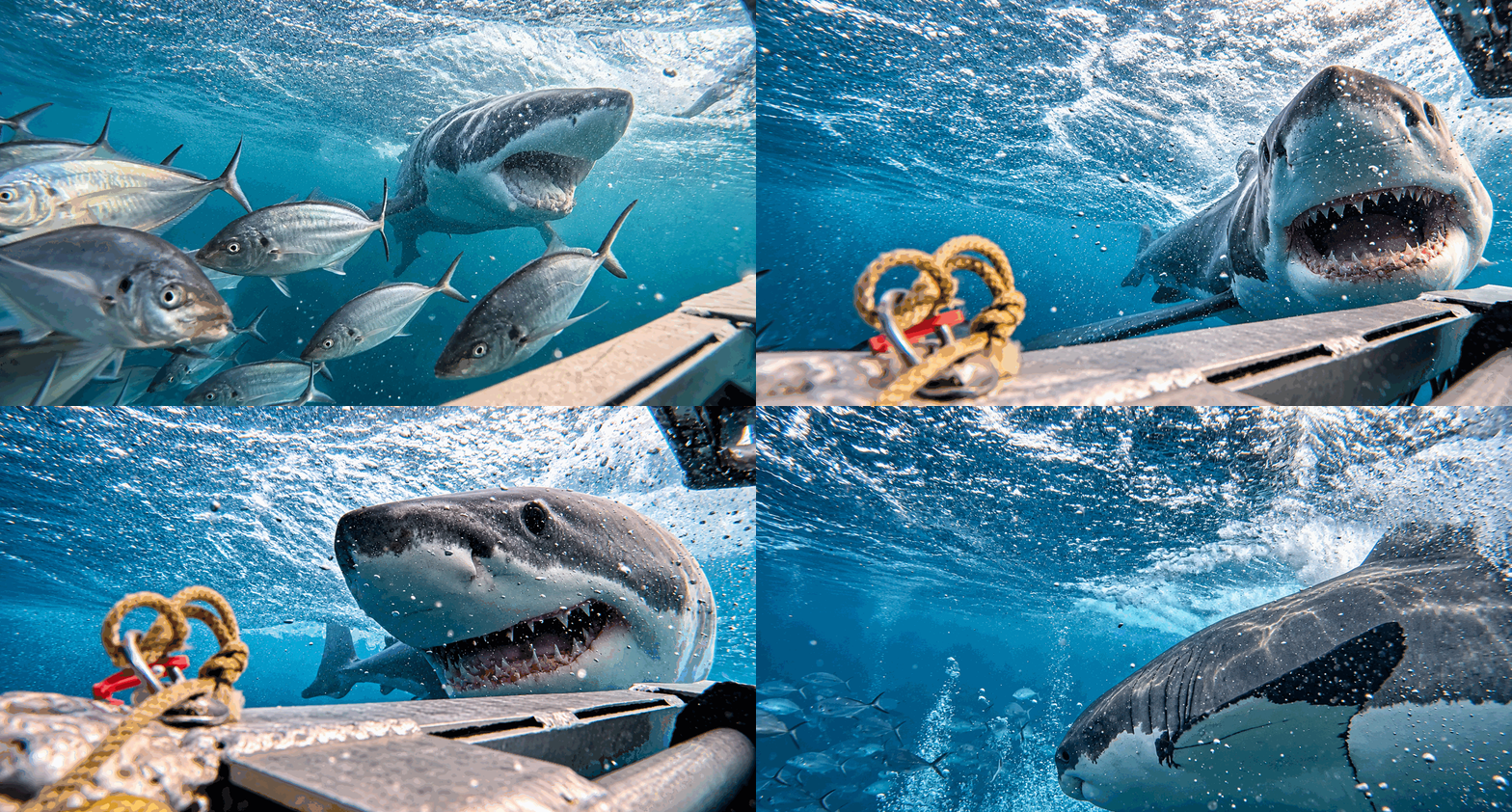
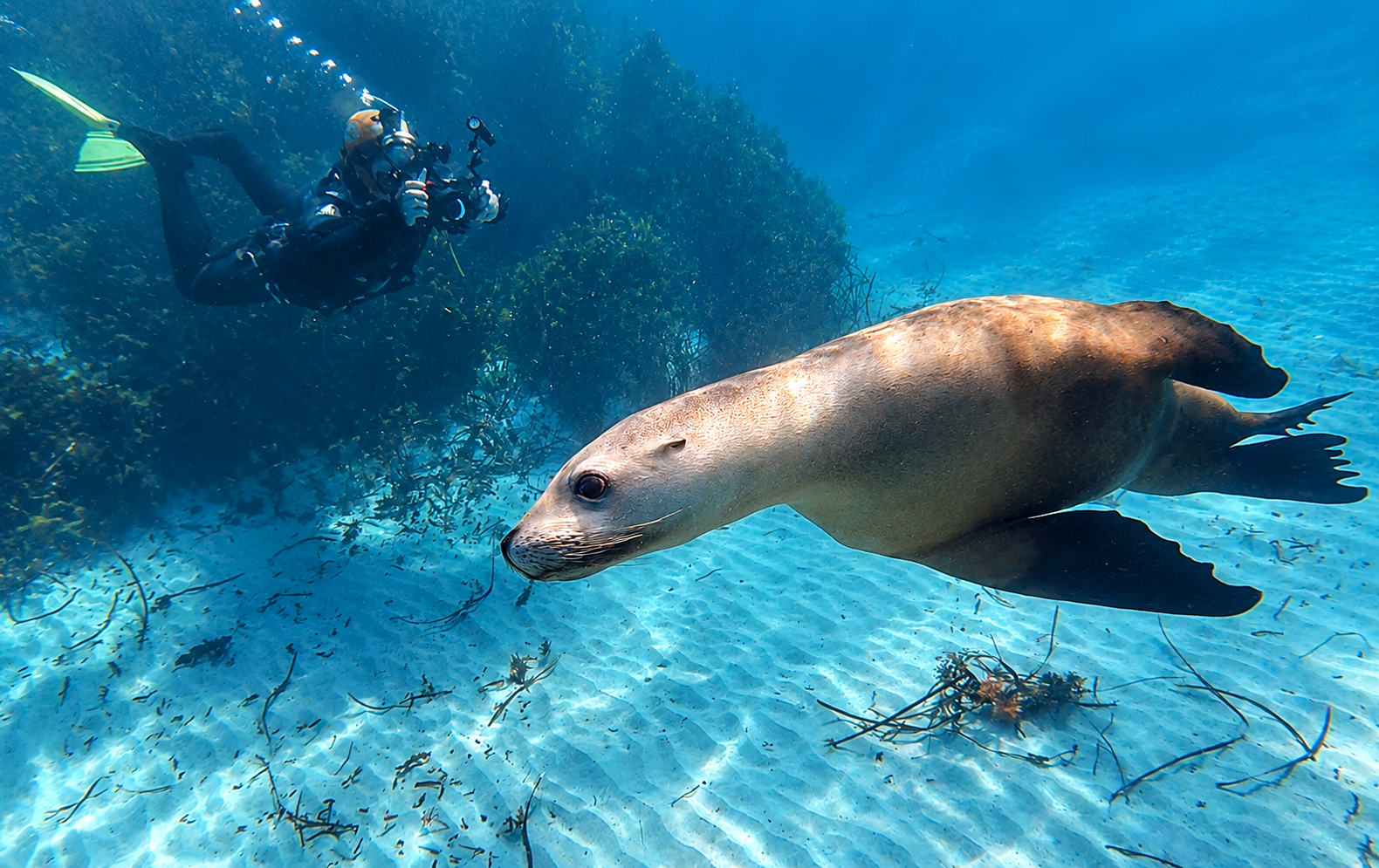
Our destination was the Neptune Islands, two groups of islands near the entrance to Spencer Gulf. Their large breeding colonies of long-nosed fur seals attract great white sharks, making these waters an internationally significant place to observe and study them. Great whites can reach around six meters in length and weigh more than two tonnes. Knowing that an animal of that size might emerge from the water beyond the cage was both exhilarating and a little unnerving.
For two bitterly cold days in the Southern Ocean, however, I froze my tail off waiting for something—honestly, anything—to appear. After a day without a sighting at North Neptune, we moved to South Neptune, then headed north again on the third day.
That morning, a small great white appeared off our stern. Everyone scrambled for a turn in the surface cage. I got in early, but as I floated in the current and peered into the water around me, I never caught a glimpse of it.
About an hour and a half later, our luck changed. Two large great whites arrived and stayed for hours. We took turns in the surface and submerged cages, awestruck by the opportunity to see these animals up close. Over the next day and a half, the anticipation that had carried me all the way to Port Lincoln gave way to the electric thrill of seeing them for myself.
Not every dive offered a clear view, and the cold never let up. But after hours in the freezing water, I had finally fulfilled a lifelong dream. I could hardly imagine another encounter on the trip matching it.
Later that month, I boarded a boat in Cairns and headed north through the Great Barrier Reef’s Ribbon Reefs toward Lizard Island. From the water, the reef feels very different from the idyllic scene you see from the air—something I had also experienced at the Blue Hole and in the Maldives. Strong currents pull through the reefs, and large Pacific swells crash against their outer edges. Out there, far from land, I couldn’t help thinking of Open Water and the unsettling prospect of being left behind.
Some sections of the reef looked battered and, to my eye, heavily dived, reminding me of how I had felt in Belize. But the reef wasn’t the main reason I had grabbed the last spot in a four-person cabin—which gave me perhaps the most miserable sleep of my life. I was there for the dwarf minke whales.
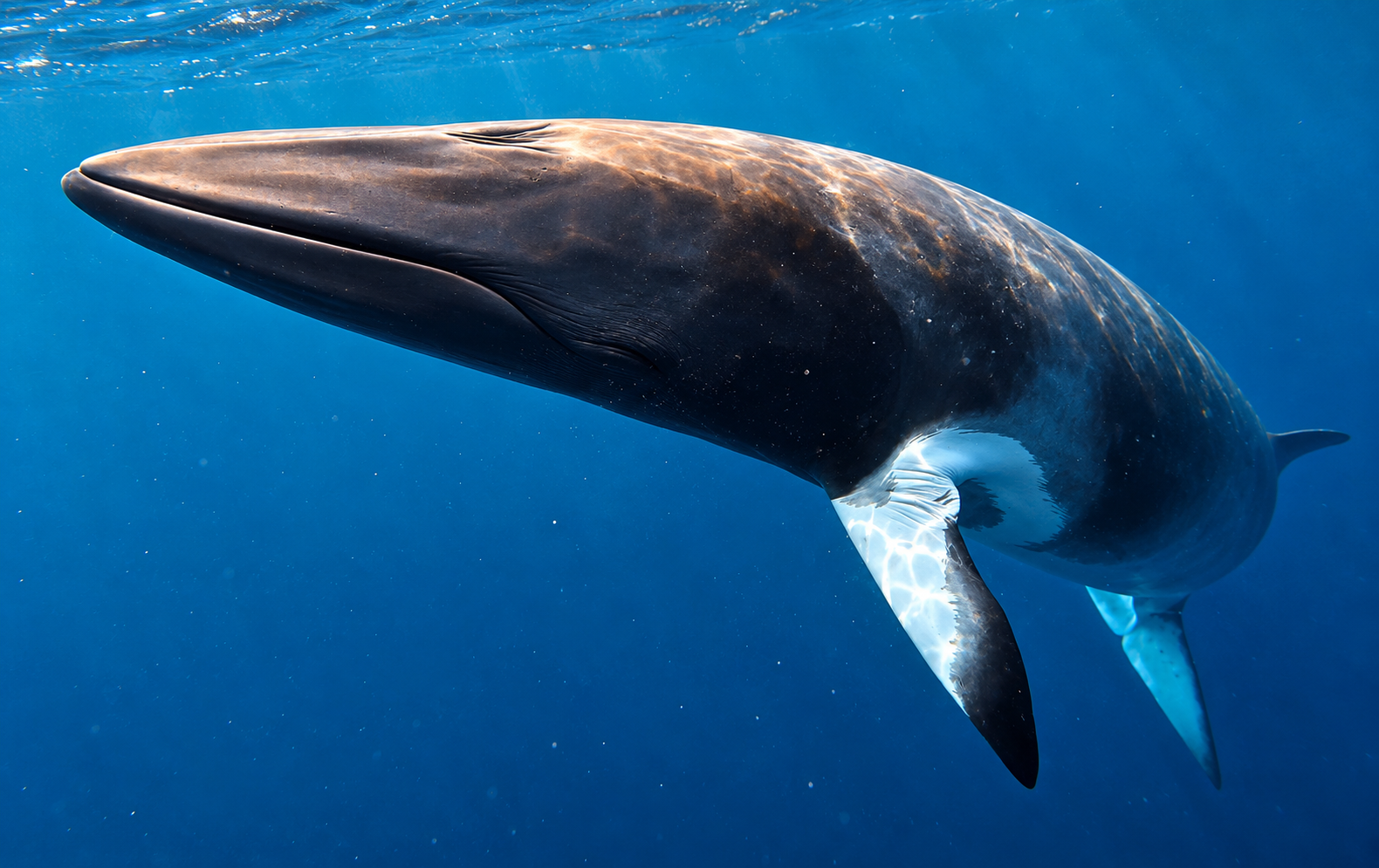
Each Australian winter, dwarf minke whales gather around the northern Great Barrier Reef, including the Ribbon Reefs, as part of their seasonal migration. This is the only known predictable gathering of these whales anywhere in the world. Their annual arrival offers an extraordinary opportunity to observe them, although researchers are still piecing together the details of their movements and behavior. Having a researcher aboard our boat made the experience even richer: between encounters, we learned about the whales we saw and the questions her fieldwork helped answer.
Swimming with them became the highlight of my trip, even after the thrill of diving with great white sharks. The minkes could be elusive one moment and astonishingly close the next. More than once, a whale approached silently from behind, and I had no idea it was there until its enormous body glided beneath me. It was my first time swimming with whales, and I was stunned by how close they came.
Despite the word “dwarf” in their name, these animals are substantial. They struck me as curious and wonderfully playful, approaching and passing beneath us on their own terms. After all the waiting and anticipation at the Neptune Islands, another extraordinary encounter came—this time without a cage between us. Floating in the open ocean as a whale chose to come closer was magnificent. Even the miserable cabin was worth it.
I want to share this documentary as a counterpoint to my own experience cage diving with great white sharks in South Australia. The film explores the controversy surrounding commercial shark cage diving, particularly the practice of using bait to attract sharks and the concerns this raises among local residents, conservationists, and others who question the industry's impact on shark behavior and the marine environment. While my encounter with these extraordinary animals was unforgettable, I believe it is equally important to acknowledge the perspectives of those who oppose this form of tourism and to consider the broader implications of bringing people and great white sharks into such close contact.
The documentary raises questions about whether attracting sharks with bait can alter their natural behavior, potentially creating risks for both the animals and people who share these waters. It also brings attention to the tension between the economic benefits of shark tourism and the responsibility to protect these remarkable predators. I found it thought-provoking, and although it has not diminished my appreciation for the experience, it has encouraged me to consider the ethical and environmental questions surrounding the industry.